×
Bigger.Bolder.Louder.
Insights · Buyer's Guide

Taxi advertising in the UK

Real 2026 taxi advertising prices in the UK, from £25 per digital cab screen. Every format, audience data and what actually works. Published with no mark-ups.

By Jamie Roberts, Founder of Loud! OOH

Jamie Roberts has spent 20 years in advertising for businesses across the UK. He founded Loud! OOH in 2026 to make OOH advertising genuinely accessible to SMEs through transparent, no-markup pricing.

13,749

London black cabs

£25

Cab Screens from

3k–5k

Daily impressions / cab

65–72%

ABC1 passengers

20 min read · Updated: 8th September 2026

Taxi advertising guides tend to follow a familiar pattern. They open with a line about moving billboards and captive audiences. They mention London black cabs. Then they direct you to a contact form. The actual numbers, the format detail, the honest assessment of when it works and when it does not, are nowhere to be found.

Taxi advertising is a genuinely distinctive outdoor format when used correctly - and one that gets misunderstood more than most, usually because people think about it as a single product when it is actually several quite different ones.
I have planned and bought taxi advertising campaigns across UK cities for brands at very different budget levels. I know which formats perform, how pricing works in practice across different fleet sizes and cities, and what the common mistakes look like.
Every price below is from the Loud! OOH rate card, with no mark-up.
This guide covers the UK taxi advertising market specifically - every format, real 2026 pricing, city selection and fleet sizing, and an honest view of what the format does well and where it falls short.
No forms. No vague ranges. No call-us-to-find-out. Just the information you need to make the decision yourself.

First, the numbers that actually matter

The UK licensed taxi market is dominated by London, with approximately 13,749 licensed black cabs covering an estimated 80,000 miles per day across the capital - city centres, mainline stations, hotels, theatres, and both Heathrow and Gatwick. Outside London, fleets range from roughly 2,100 licensed taxis in Manchester down to 680 in Newcastle. A London cab averages 15 to 20 fares per day and covers about 150 miles. A 100-cab campaign delivers roughly 300,000 to 500,000 exterior impressions daily.

~13749

Licensed black cabs
in London

3k–5k

Exterior impressions per cab/day

London city centre
65–72%

ABC1 share of black cab users

Multiple industry sources
15–20

Fares per cab per day

Licensed taxi operator data
20+

UK cities with taxi inventory

Loud! OOH market coverage

Two characteristics make taxi advertising genuinely distinctive as a medium.

City-wide

Exterior reach

Branded cabs move through the densest footfall zones - shopping streets, business districts, stations, hotels. Presence builds through continuous urban circulation, not a single fixed site.

15–20 min

Interior dwell

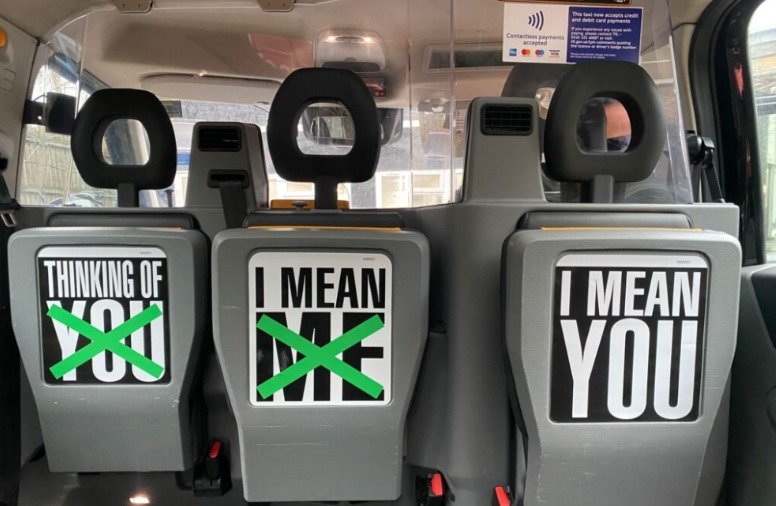
The passenger is seated with panels or screens in eyeline - no scrolling, no competing screen. The highest-quality engagement in the taxi portfolio.

Exterior branding reaches the city at large; interior formats reach the passenger directly. Plan both - not one format decision.

You are buying two distinct exposures simultaneously: city-scale exterior reach and intimate interior engagement with a high-income passenger.

Taxi and private hire advertising gives brands access to a large national vehicle market. In England alone, there were approximately 342,300 licensed taxis and private hire vehicles as of 1 April 2026, including around 52,300 taxis and 290,000 private hire vehicles

Who actually uses UK taxis? The audience question.

Taxi advertising has two audiences at once - the city at large and the captive passenger - plus a passenger profile that skews affluent. Understanding which formats reach which is fundamental to whether a campaign works.

3k–5k/day

Exterior audience

Volume audience · city at large

Pedestrians, drivers, and adjacent traffic in high-footfall zones. London averages 3,000–5,000 impressions per branded cab per day.

23 min

Interior audience

Captive audience · in-journey dwell

Panels and screens in direct eyeline throughout the journey - no scrolling, no competing screen. Long enough for detail, QR codes, and direct response.

65–72%

Interior audience

ABC1 profile · professionals 25–55

Professionals aged 25–55, travelling for business and leisure. Consistently more affluent than the population at large.

Where cabs actually go

Exterior creative needs a single message readable in seconds; interior can carry copy, QR codes, and direct response across 15–20 minutes. Cabs cluster where demand is highest - London Zone 1–2, Manchester Spinningfields and MediaCityUK, Edinburgh Old and New Town.

A taxi is not one audience. Plan exterior and interior as two distinct exposures - not a single format decision.

Every format explained

Formats across exterior, interior, and digital – what each one is, what it costs, and who it works for. Rate card figures match the pricing page. Media costs per cab per four weeks unless stated; VAT and production excluded.

EXTERIOR

Supersides

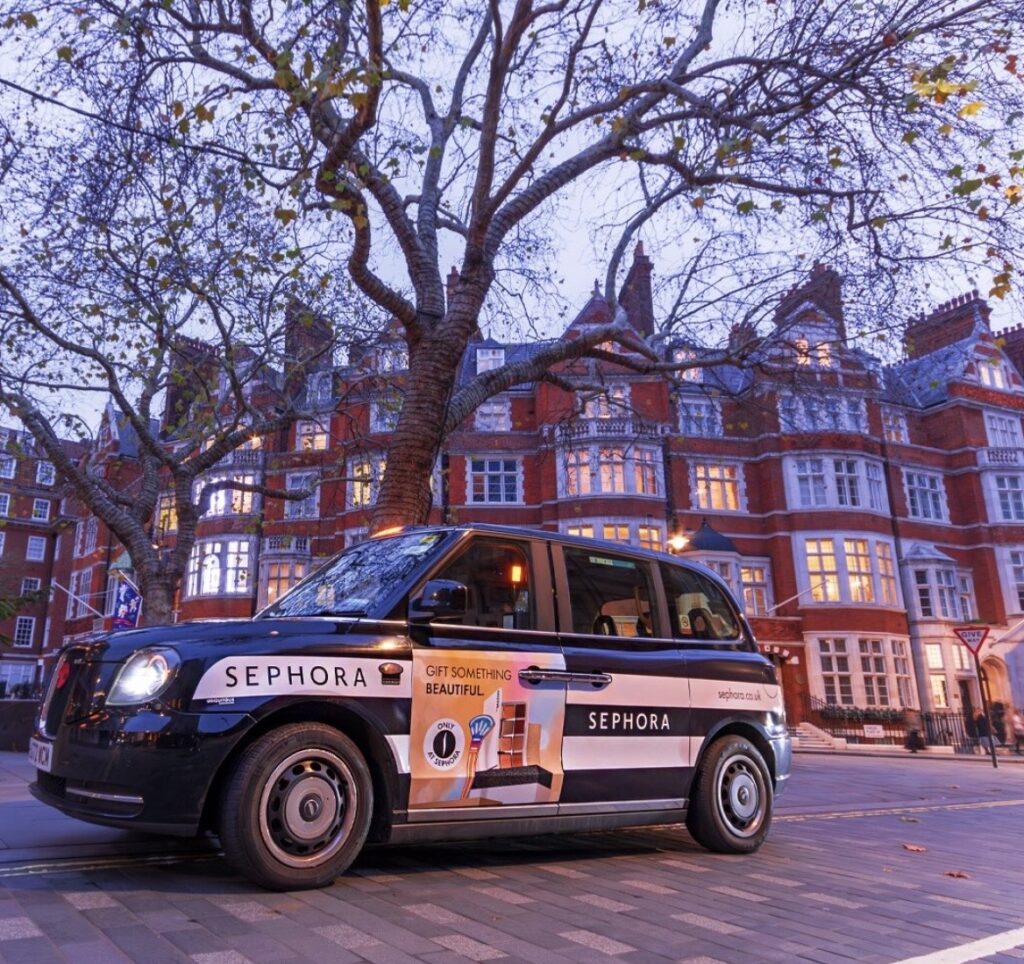
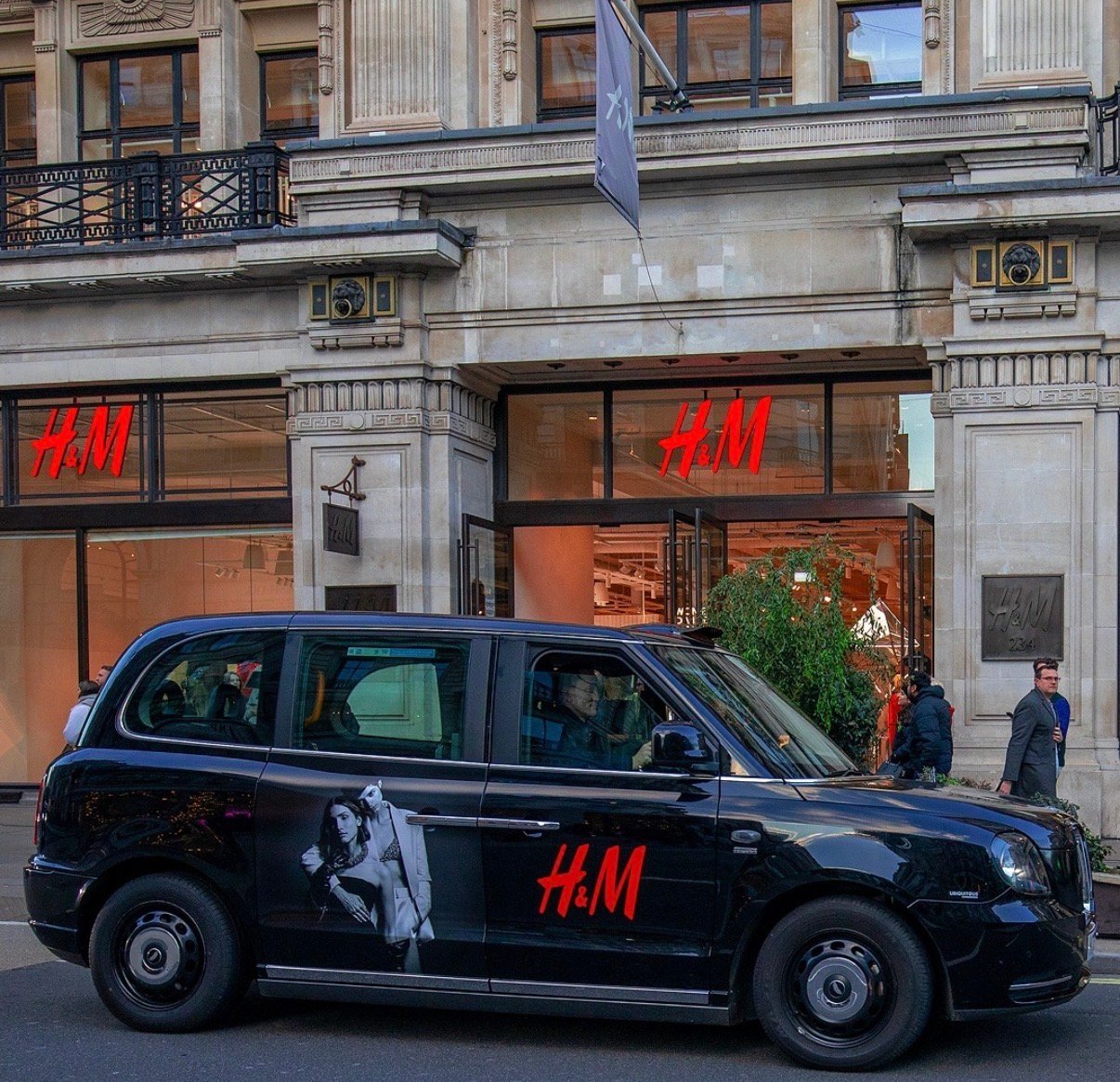
Large panel along the lower side body between the wheel arches – the format most people picture. Highest pavement and adjacent-vehicle visibility at fleet scale. Production: printed vinyl, priced separately.


London

from £395 / cab / 4 wks

Regional

£175–£275 / cab / 4 wks

Min. fleet

50 London · 25 regional

Best for

Brand awareness, product launches, moving city-centre presence.

EXTERIOR

Full Livery Wraps

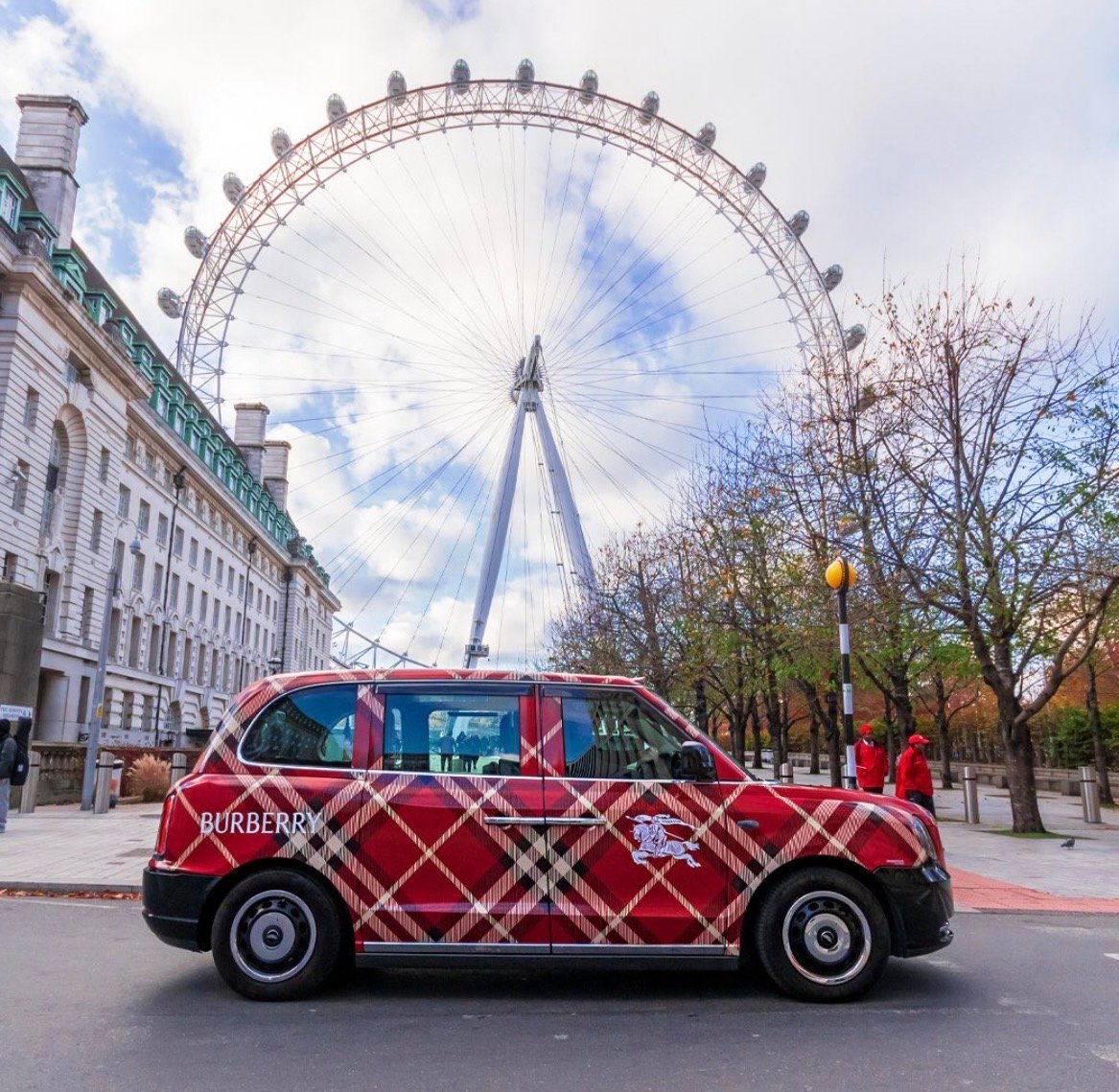
Entire exterior covered in branded vinyl. Done well: social photography, press, earned reach. Done poorly: expensive production with mediocre return. Production typically £800–£1,400 per cab extra.


London

from £2,750 / cab

Regional

from £850 / cab

Unit

Per cab / campaign

Best for

Major brand moments where the taxi is the creative canvas.

Interior

Tip Seat Panels

The largest standard side format on a double decker – superside plus a vertical panel forming a T. Extra height lifts creative above street clutter. Typical campaigns run 10 to 30 cabs and pair well with 6-sheets.

London

£500–£900 / cab

Regional

£250–£500 / cab / 2 wks

Audience

Pedestrians and traffic

Best for

High-impact brand campaigns, launches, creative that earns the bigger canvas.

Activation

Branded Hire

Dedicated branded cab booked by the hour or day for events, activations, and PR-led city moments – not a fleet media buy.


London

from £95 / hour

Regional

from £75 / hour

Use

Events · launches · PR

Best for

Short-burst visibility around a specific moment or venue.

TAXI ADVERTISING FORMATS

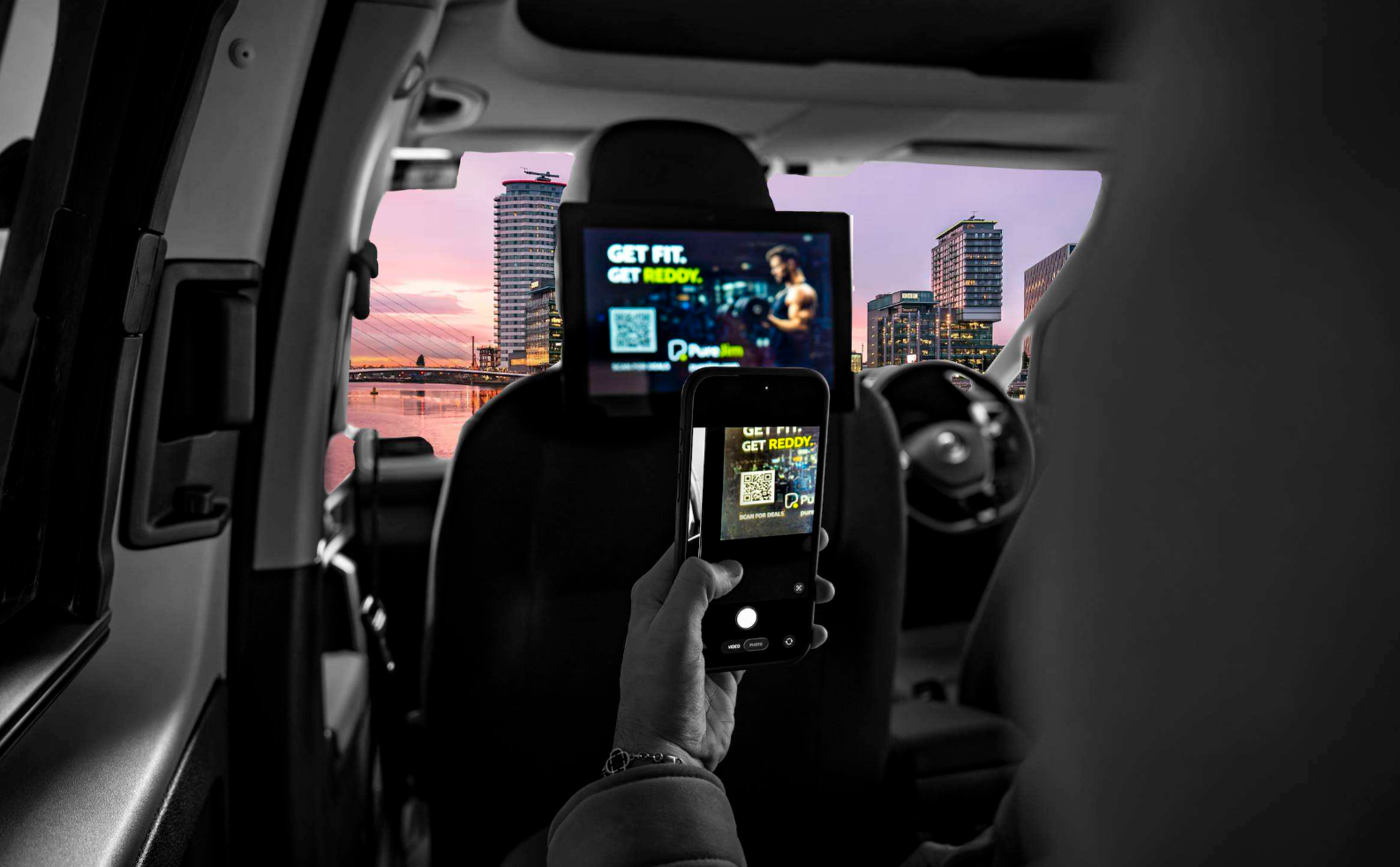
DOOH TAXI SCREEN

Digital taxi screens put your campaign directly in front of a seated, captive audience, with journeys typically lasting long enough for passengers to relax and engage with the content. A particularly
interesting format for local businesses, allowing brands to reach people while they are travelling through the area.

London

£40 / cab / 4 wks

Regional

£25 / cab / 4 wks

Best for

Best for reaching urban audiences at street level, combining high visibility with repeated exposure across busy towns and cities.

The 2026 rate card

Media cost only, excluding VAT and production. Two-week periods unless stated - published openly, no mark-up.

Sort, filter, and compare every format in the table below. For all UK OOH formats, see the complete 2026 pricing page.

2026 Taxi Rate Card
Format London from Regional from Min. fleet (Lon / reg) Notes
Superside panel from £395 / cab / 4 wks £175–£275 / cab / 4 wks 50 / 25 Primary exterior format. High street visibility.
Tip seats (interior) from £85 / cab / 4 wks £40–£65 / cab / 4 wks - Interior. 15–20 min passenger dwell.
Full livery wrap from £2,750 / cab from £850 / cab - Per cab / campaign. Production extra.
DOOH Taxi screen from £40 / cab / 4 wks from £25 / cab / 4 wks - -
Branded hire from £95 / hour from £75 / hour - Events, activations, and PR moments.

Media cost only, excl. VAT and production. Source: Loud! OOH 2026 Rate Card.

What a real campaign looks like at different budget levels

Individual cab prices only tell you so much. Here is what taxi advertising actually looks like across different total budgets - from regional entry to fleet dominance.

Under £5,000

Entry

Regional entry-point

A small regional superside fleet for four weeks - genuine branded presence in Manchester, Birmingham, Edinburgh, or similar at the lower end of the rate card. London at this level is tip seats or a short branded-hire activation, not a meaningful exterior fleet.

£5k – £20k

Growth

London entry or regional multi-format

25-cab London superside for four weeks at the lower end (~£10k media). At the higher end: multi-format regional (supersides plus interior) or a larger regional fleet with meaningful city-centre footprint.

£20k – £60k

Scale

Purposeful London or national fleet

50–100-cab London superside over four to eight weeks. Or exterior plus interior on a smaller fleet. Or simultaneous London plus two or three regional cities. Full wraps start to enter the plan at this level.

£60k+

Domination

Fleet dominance

200–500-cab London campaigns, full-wrap fleet programmes, or multi-city simultaneous activity. At this scale the branded fleet becomes a visible part of the city landscape - full wraps reliably generate earned media.

The factors that move the price

Five variables explain most of the difference between two otherwise similar campaigns.

01

Biggest lever

City

London commands a significant premium - typically 1.5 to 2× regional rates for equivalent formats. For brands whose audience is outside London, regional cities often deliver better value on a cost-per-relevant-impression basis.

02

Volume

Fleet size

Larger fleet bookings attract volume discounts. A 200-cab campaign does not cost four times a 50-cab campaign. Discounts typically kick in at 100 cabs - committing to higher volume upfront consistently works out cheaper.

03

Package

Format combination

Interior and exterior formats are priced separately but packaged together in most serious campaigns. Bundling through a single operator almost always beats approaching different suppliers for different formats.

04

Timing

Campaign duration

Four weeks is standard. Eight or twelve weeks reduce per-week cost. For sustained taxi presence, a longer commitment upfront is more economical than rolling short bookings.

05

Total cost

Production costs

Exterior vinyl print and fitting is additional. Superside vinyl: typically £80–£150 per cab. Full wrap: £800–£1,400 per cab. Always build production into the total budget at planning stage.

Production rule: Always build vinyl print and fitting into the total budget from the start. A superside panel typically costs £80–£150 per cab; a full wrap adds £800–£1,400 per cab on top of media.

Does it work? The honest answer on effectiveness.

Taxi earns its place for premium urban presence and interior engagement with an affluent audience - best as part of a broader campaign, not the sole channel.

Yes - if you need premium urban presence and interior engagement

Interior formats deliver 70%+ recall in several industry studies. Exterior formats build brand presence in specific urban environments at a quality level static posters cannot replicate.

Format effectiveness
Format Primary audience Avg exposure Recall Direct response?
Superside exterior Pedestrians, drivers, adjacent passengers 2–5 sec Moderate No
Full wrap exterior As above, higher visibility 2–5 sec Moderate to high No
Roof sign Pedestrians, drivers 3–10 sec Low to moderate No
Tip seat panel Cab passenger (interior) 15–20 min High Yes (QR viable)

Where it's strongest

Interior formats deliver 70%+ recall in several studies - captive environment, close proximity, and genuine dwell. QR codes on tip seat panels have a realistic chance of direct response. Exterior builds premium urban presence at a quality static posters cannot replicate.

What it doesn't do well

Taxi is not mass-reach like a national billboard campaign - 100 London cabs is meaningful city-centre presence, not millions reached simultaneously. Exterior needs simple, high-contrast creative readable in seconds. Works best combined with other channels.

Taxi advertising rewards brands that invest in creative built specifically for the format - exterior for seconds, interior for minutes.

Choosing the right UK city: a practical framework

Match the city to your audience - not just the largest fleet number.

London professionals

London is the strongest single market for taxi advertising - scale, commercial concentration, and ABC1 skew of black cab users. Essential for financial services, premium consumer, and media brands.

National at controlled budget

Simultaneous campaigns in Manchester, Birmingham, and Edinburgh provide meaningful coverage of three major conurbations at regional pricing - 200–300 cabs total at a cost that buys a modest London fleet alone.

Regional SME entry

25-cab superside campaigns in Manchester or Edinburgh can be planned from around £6,000–£9,000 total including production - genuinely accessible for city-specific businesses.

Zone biasing in London

Fleet operators can bias towards the City and Canary Wharf for financial district reach, or the West End for premium leisure - directional rather than precise, because cabs follow demand.

```html

Licensed taxi fleets by city

Approximate fleet sizes · major UK markets

London
13,749
Manchester
2,100
Birmingham
1,700
Glasgow
1,400
Edinburgh
1,250
Leeds
1,050
Liverpool
900
Bristol
750
Newcastle
680
```
London
13,749 licensed taxis · Premium · City professionals, premium consumers, tourists
Best for
National brand campaigns, premium positioning
Manchester
2,100 licensed taxis · Regional · Northern business and consumer mix
Best for
North of England reach, tech and media
Birmingham
1,700 licensed taxis · Regional · Midlands business and leisure
Best for
Midlands-focused campaigns, retail
Glasgow
1,400 licensed taxis · Regional · Scottish urban consumers and professionals
Best for
Scotland-wide reach, with Edinburgh
Edinburgh
1,250 licensed taxis · Regional · Scottish professionals and tourists
Best for
Premium Scottish audience, financial services
Leeds
1,050 licensed taxis · Regional · Yorkshire business and consumer
Best for
Yorkshire regional reach, retail & hospitality
Liverpool
900 licensed taxis · Regional · North-west leisure and consumer
Best for
Supplementary north-west coverage
Bristol
750 licensed taxis · Regional · South-west professionals and leisure
Best for
South-west ABC1 audience
Newcastle
680 licensed taxis · Regional · North-east business and leisure
Best for
North-east regional campaigns

The booking process: what actually happens

Allow a minimum of three to four weeks from brief to live for superside. Exterior vinyl print and fitting typically takes one to two weeks after artwork sign-off. Full wraps need four to six weeks. Interior print formats move faster - typically two to three weeks from artwork approval.

Week 1 - Brief & fleet plan

City selection, format mix, fleet size, and rate confirmation.

Week 2 - Artwork

Creative sign-off, CAP compliance, and cab-model size specifications.

Weeks 3–4 - Production & live

Vinyl print and fitting for exterior; interior installs can move faster.

The UK taxi market is served by national operators and city-specific fleet owners. Booking through an agency with established operator relationships gets you the right fleet selection without managing multiple suppliers across cities.

Compliance: Artwork must comply with the CAP Code. and individual operator content policies. Submit for approval before print. Exterior size and bleed specs vary by cab model – confirm before artwork is finalised.

Is taxi advertising right for an SME?

Straight answer: Taxi can work very well for smaller businesses with the right audience profile, particularly in regional cities where entry costs are manageable - a 25-cab superside in Manchester or Edinburgh typically lands between £6,000 and £9,000 including production. London needs more commitment for meaningful scale, but it is not exclusively a large-brand format.

When it makes sense

  • Your target audience is concentrated in a specific UK city and taxi users are part of that audience
  • You want premium, moving presence in a city centre without a major billboard commitment
  • You are targeting professional or high-income consumers for whom the black cab context reinforces positioning
  • Your message has a direct response component that benefits from interior formats and passenger dwell time
  • You are launching in a new city and want visible, talked-about brand presence

When to think twice

  • Your audience is primarily suburban or rural rather than city-centre concentrated
  • You need measurable, trackable direct response as the primary campaign metric
  • Your creative budget is insufficient for work built specifically for the taxi format
  • Your timeline is shorter than three to four weeks from brief to live
  • You expect taxi advertising alone to carry awareness without supporting digital or broader OOH

How to get more from your taxi advertising budget

Combine exterior and interior formats on the same fleet. One fleet cost, two distinct audience exposures.

Five planning moves that consistently improve what a taxi budget delivers.

01

Dual audience

Combine exterior and interior on the same fleet

One fleet cost, two distinct exposures: city-wide exterior reach and intimate interior passenger engagement. Running supersides without interior formats leaves the passenger opportunity on the table.

02

Creative

Design for both audiences explicitly

Exterior needs brand and a single message in under three seconds. Interior formats, with 15–20 minutes of dwell, can carry copy, detail, and QR codes. Using the same artwork for both consistently underperforms.

03

Direct response

Use interior formats for direct response

Taxi interiors are one of the few outdoor formats where QR codes actually work. The passenger is holding a phone, has time, and the panel is at reading distance.

04

Duration

Commit to eight weeks rather than four

Taxi advertising builds recognition through repeated exposure. Per-week cost reduction on eight weeks, combined with frequency uplift, consistently produces better brand recall than a shorter higher-spend burst.

05

Measurement

Run alongside digital to capture interest

Taxi advertising drives subsequent search and social behaviour. Running paid search alongside your taxi activity consistently improves measurable return - the taxi builds recognition, digital captures the intent.

Frequently asked questions

How much does taxi advertising cost in the UK?

Based on the Loud! OOH 2026 rate card, London superside taxi advertising starts from £395 per cab per four weeks. A realistic entry-level London campaign of 25 cabs costs around £9,875 in media, plus print production; 50 cabs from around £19,750. A full livery wrap starts from £2,750 per London cab (campaign rate) plus £800–£1,400 production per cab. Regional supersides run £175–£275 per cab per four weeks – a 25-cab regional campaign from around £4,375–£6,875 in media. Tip seats start from £85 in London and £40–£65 regionally. See full pricing on our 2026 rate card.

In London, 50 cabs is typically the minimum for visible city-centre presence. Below 50 cabs, the fleet is too small to generate consistent impressions across the city's commercial zones. In regional cities, 25 cabs is a workable minimum. For major London campaigns, 100–200 cabs is where the format really delivers at scale.

Allow three to four weeks from brief to fleet live for superside. Full wraps need four to six weeks minimum. Interior formats can move slightly faster - typically two to three weeks from artwork approval. Brief at least five weeks ahead of a specific launch date.

Yes, consistently. Research puts the ABC1 share of London black cab users at 65–72%, significantly above the London average and well above the national average. Higher fares and the professional contexts in which black cabs are most commonly used naturally select for higher-income users.

To a degree. London fleet operators can bias cab selection towards specific zones - the City and Canary Wharf for financial district reach, or the West End for premium leisure. Licensed black cabs follow demand rather than fixed routes, so geographic targeting is directional rather than precise.

A superside is a printed panel on the side body; a full wrap covers the entire exterior. Supersides are significantly cheaper in media and production, allowing larger fleet sizes at a given budget. Full wraps are more visually dominant and more likely to generate social and press attention. For most campaigns, supersides at higher fleet volume outperform wraps at lower volume on cost-per-impression. Full wraps earn their premium when the creative justifies the investment.

Final thoughts

Taxi advertising earns its place in UK outdoor. The dual audience - exterior city presence plus intimate interior passenger engagement - is genuinely distinctive. The premium urban context, particularly in London, reinforces brand positioning in a way a suburban roadside poster cannot.

The brands that get the most from taxi design for both audiences explicitly, commit to a fleet size that generates real presence, and run long enough for frequency to build - as part of a broader campaign, not a standalone channel.

Does your audience use taxis in the city you're targeting? If they do, taxi advertising can reach them with a quality and intimacy that almost no other outdoor format matches.

At Loud! OOH we plan and buy taxi advertising for SMEs and challenger brands across the UK. We publish pricing openly and do not mark up media costs. See our 2026 rate card or contact hello@loudooh.co.uk / 020 4514 9147.

Sources referenced in this article

Plan your campaign

See exactly what your taxi campaign will cost

We plan and buy taxi advertising for SMEs and challenger brands across the UK. Open pricing, no media mark-up - you know what you're committing to before you commit to anything.