
Flood Re: The Living Room
Case study · Flood Re · August 2026
Flood Re: The Living Room
A 3D anamorphic flood, driven through the streets it was warning people about.
Client: Flood Re Campaign: ReThink Resilience Format:3D anamorphic DOOH, 40
seconds Media: Digital EcoVan, the largest in the UK Route: Areas worst affected by UK
flooding, including a Manchester city centre leg Manchester impacts: Around 220,000
Creative, public affairs and PR: Cavendish Consulting Media planning and placement:
Loud! OOH
+188%
New traffic uplift
£325
Published 48-sheet rate
5
Press placements
6 wks
Idea to live
01
Client
Flood Re
02
Idea
Put a real £650 quote next to our £325 published rate - on the actual site.
03
Proof
Trade + creative + national press syndicated the story without paid placement.
04
Outcome
+188% new traffic, LinkedIn growth, leads, and client campaigns booked.
04
Outcome
+188% new traffic, LinkedIn growth, leads, and client campaigns booked.
04
Outcome
+188% new traffic, LinkedIn growth, leads, and client campaigns booked.
The problem
The problem was not awareness. It was distance.
That statistic has been public for years. People still do not act on it, because 6.3 million is a number you nod at and forget by the next junction. Flood risk gets quietly filed under things that happen to somebody else, in a village on the news, on a road you do not drive down.
Flood Re was set up under the Water Act 2014 as a joint initiative between the UK
government and the insurance industry, making flood cover available and affordable for the
highest risk homes. Ten years in, the organisation wanted to shift the conversation.
Repairing the same flooded house over and over is not a plan. Resilience is. That is what
ReThink Resilience exists to say.
So the brief was not to tell anyone flooding exists. It was to stop them filing it somewhere
they never look.
Division of work
Cavendish made something that stops you. We made sure it ran where it could not be avoided.
Worth being straight about who did what here, because these are two different jobs and we only did one of them. Cavendish Consulting built the creative. A brick wall breaks apart on screen. Behind it is a room anyone would recognise. Striped wallpaper, an armchair, family photos on the wall, a child’s teddy bear sat exactly where a child left it. Then the water comes in and takes all of it.
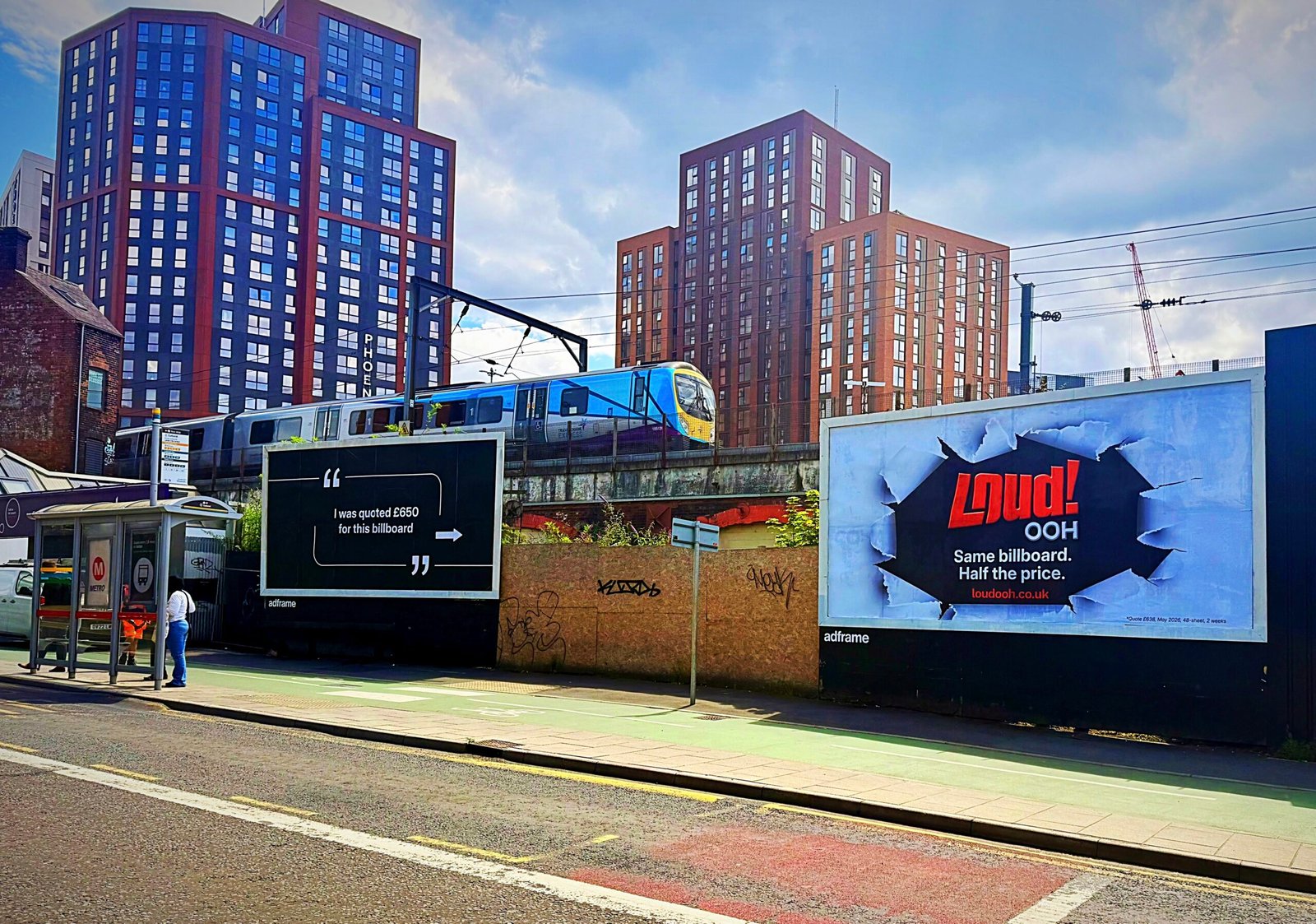
48-sheet pair · York Street · Leeds city centre
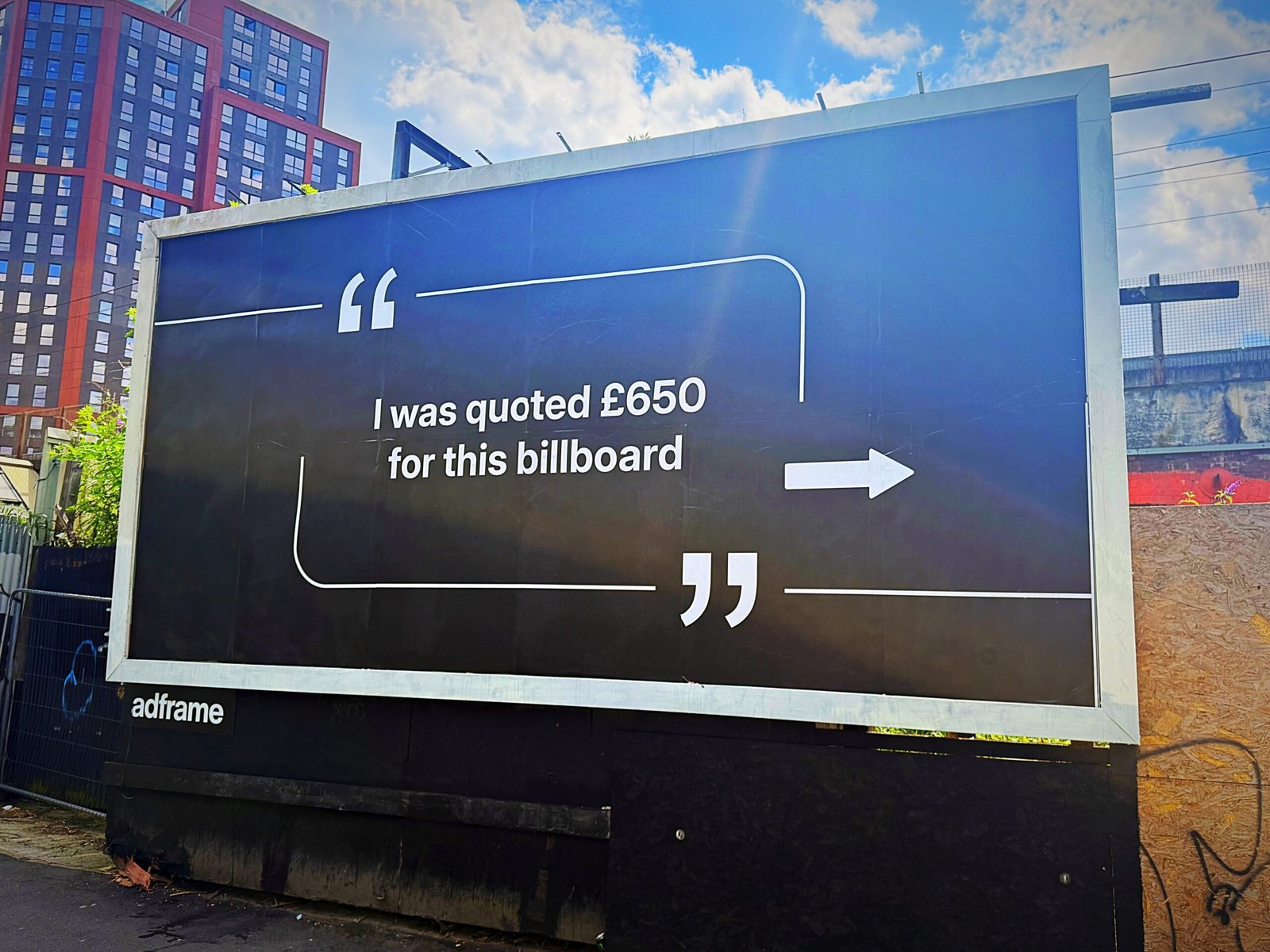
Board 01 · The quote
I was quoted £650 for this billboard.
Real quote · same site
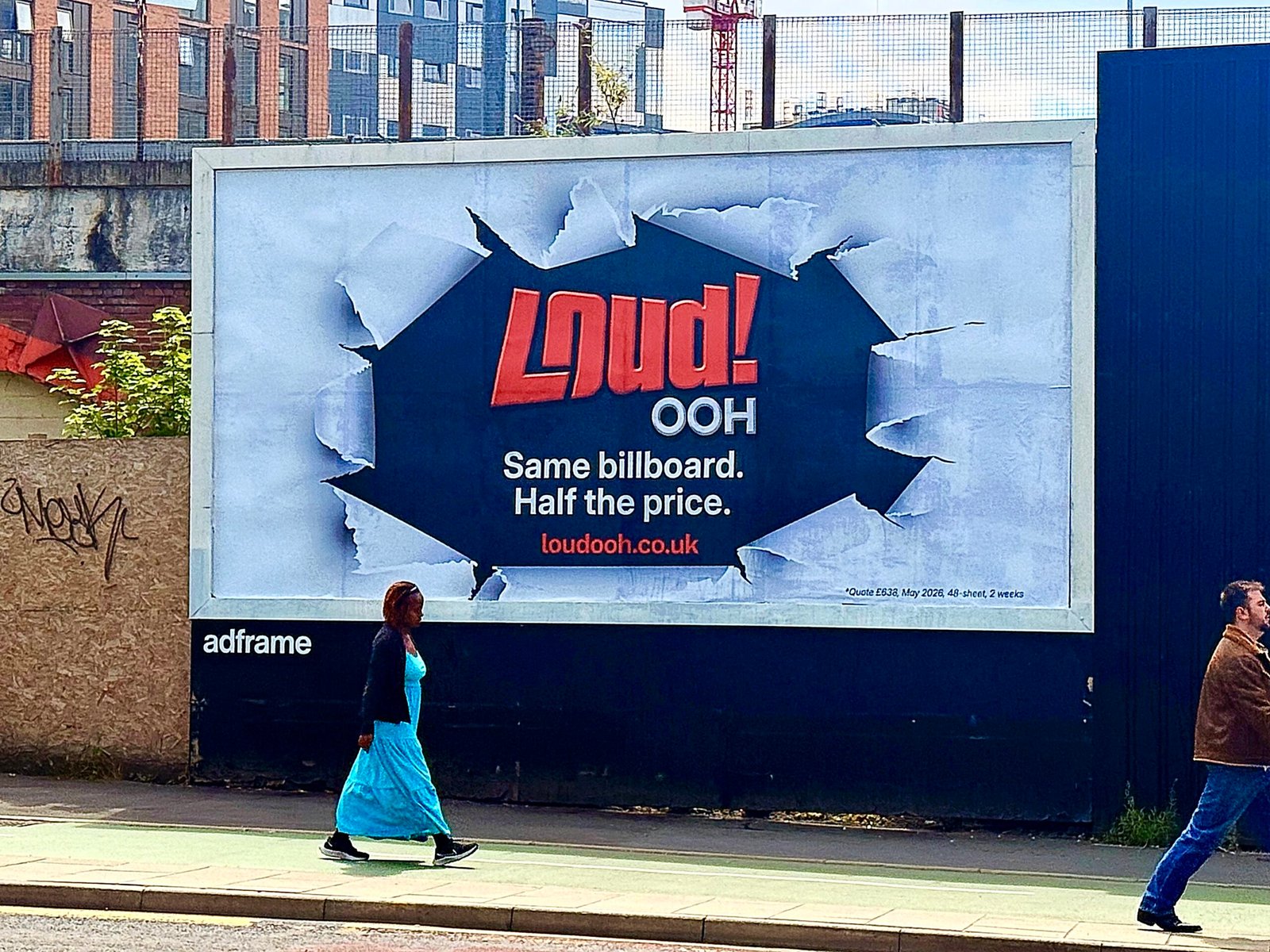
Board 02 · The answer
Same billboard. Half the price.
£325 · Loud! OOH published rate
Not a teaser. Not an asterisk. £325 is what the media costs when markup is removed - checkable on our rate card today.



Route
Why a van, and not a fixed screen ?
Anamorphic 3D is almost always booked on fixed screens. The famous ones. Piccadilly Lights, the big corner sites, the screens that get built into every awards case study. Those screens are excellent, and they are also mostly in central London. That is a problem when the entire barrier you are trying to break is people believing flood risk belongs to somewhere else. Running the work exclusively in zone one would have confirmed the thing we were trying to undo.
So we recommended a moving digital ad van, on the largest Digital EcoVan in the country, and we routed it into communities that have already had water through the door. Flood risk is local. It is a specific street, a specific ground floor, a specific carpet. The media plan had to behave the same way.
When the whole problem is distance, the honest answer is to physically close the distance and put the thing in front of where somebody is standing. That is the argument for out of home, and it is the reason this brief only worked outdoors.
Build
The technical problem nobody sees
Here is the part that made this harder than it looks.
Fixed anamorphic screens are designed backwards from a single known viewing position. The whole illusion is engineered for one spot on one pavement. That is why anamorphic work tends to look incredible in the case study film and less convincing when you are actually standing there at the wrong angle.
A van in traffic has no known viewing position. There is no single spot. There is a bus lane, a crossing, a shop doorway, a phone camera held up at head height, and a passenger looking sideways out of a car.
So the animation had to hold its depth from any pavement, at any angle, in daylight, and in British weather. It was built to survive real streets rather than to look good in a render. That constraint shaped the creative build from the start, and it is the single biggest reason this campaign works on the road.
Worth being straight about who did what here, because these are two different jobs and we only did one of them. Cavendish Consulting built the creative. A brick wall breaks apart on screen. Behind it is a room anyone would recognise. Striped wallpaper, an armchair, family photos on the wall, a child’s teddy bear sat exactly where a child left it. Then the water comes in and takes all of it.
The Manchester leg
We ran it through Manchester city centre on a wet afternoon, past the retail streets and the cathedral gardens.
That timing was deliberate. Standing water on the pavement, a flooded room on the screen, both in the same eyeline. You do not need to explain the connection to anyone. They are already stood in it.
48-sheet pair · York Street · Leeds city centre
Board 01 · The quote
I was quoted £650 for this billboard.
Real quote · same site
Board 02 · The answer
Same billboard. Half the price.
£325 · Loud! OOH published rate
Not a teaser. Not an asterisk. £325 is what the media costs when markup is removed - checkable on our rate card today.
The Manchester leg alone delivered around 220,000 impacts.
The van runs entirely on eco fuel. For a campaign about climate resilience that was a condition of the media plan rather than a nice line to add afterwards. It would have been slightly absurd to burn diesel around a city to talk about climate adaptation.
Lessons
What we would tell anyone planning something similar ?
Three things came out of this that apply well beyond flood risk.
01
Anamorphic does not have to mean central London.
If the audience you need is outside zone one, the format can travel. It costs less than the landmark screens and it goes where the people are.
02
Route planning is creative work.
Choosing a wet afternoon and a street with standing water on it did more for this campaign than another 50,000 impacts would have. Where and when are decisions, not admin.
03
Sustainability constraints are easier to hit than most people assume.
Eco fuel was available, it was specified from the outset, and it did not blow up the budget.
Campaign Credits
Who did what ?
| Client | Flood Re |
| Campaign | ReThink Resilience |
| Advertising Agency | Loud! OOH |
| Creative Agency | Cavendish Consulting |
| Public Affairs & PR | Cavendish Consulting |
| Director of Video Production | Mark Darlington |
| Art Director | Emma Birch |
| Project Lead and Strategist | John McColl Burns |
| Media | Digital Ads Van, EcoVan, Manchester |
| Format | 3D Anamorphic DOOH, 40 Seconds |
| Country | United Kingdom |
Plan your campaign
Want this kind of thinking on your campaign ?
Loud! OOH is an independent out of home agency with offices in Leeds and London. We publish every rate on our website and add no markup, with 48 sheet regional billboards from £325. Jamie Roberts founded the agency in 2026 after 20 years in advertising, including a period at Google and the last six in out of home.
Flood Re was our first national campaign for a government backed scheme. The pricing works the same way it does for everyone else, which is to say you can see it before you talk to us.